YANUNI: On the Frontlines of the Amazon — A Raw, Urgent Call to Protect What’s Left
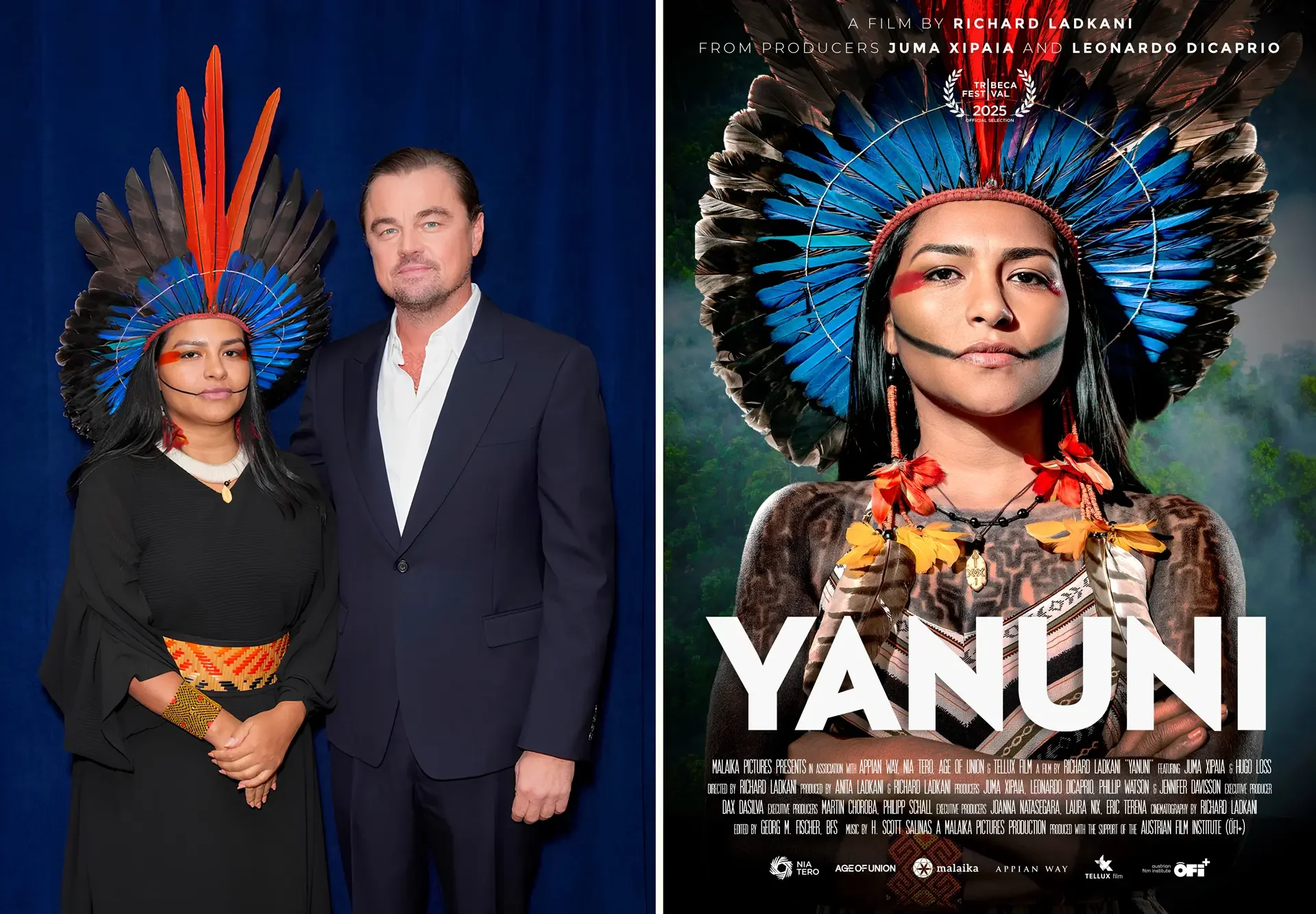
A Powerful Invitation at the Close of COP30
As COP30 came to an end in Belém, Brazil, we were honoured to be invited by Alice Aedy, CEO of Earthrise Studio to a private screening of YANUNI in London — a documentary that shook the room with images never seen before.
In a week dominated by high-level negotiations, last-minute compromises and familiar diplomatic stalemates, YANUNI offered something that COP never quite can: an unfiltered, intimate, and emotionally devastating portrait of the Amazonian frontline, where the climate fight is not theoretical but existential.
What Is YANUNI?
YANUNI is directed by Richard Ladkani, known globally for hard-hitting environmental documentaries. The film is produced by a team that includes Juma Xipaia, the film’s main protagonist, along with executive producers such as Leonardo DiCaprio, Anita Ladkani, and collaborators from environmental organisations working across the Xingu region in Brazil.
It tells the extraordinary story of Juma Xipaia, an Indigenous leader from the Xipaya territory, who rose to become the first female chief of her people and later one of the most visible defenders of the Amazon. The film follows her journey alongside her husband, Hugo Loss, a Special Operations leader at IBAMA — Brazil’s federal environmental enforcement agency.
Together, they bring the viewer into the most remote corners of the Amazon, where illegal mining ravages forests and contaminates rivers with mercury in the relentless pursuit of gold.
A Mission Deep in the Forest: The Fight Against Illegal Gold Mining
While deforestation has long been recognised as a catastrophic threat to the Amazon, YANUNI shifts the spotlight onto an equally destructive force: illegal gold mining.
For the first time, a film follows an IBAMA special operations team organising high-risk missions deep inside the forest — missions where armed miners, criminal networks and environmental devastation collide.
The destruction is vast:
1. Environmental Impacts
Mercury released into the rivers poisons entire ecosystems.
Fish and river species accumulate toxic levels of contamination.
Riverbeds are torn apart, forest floors churned into wastelands.
Fires, machinery and chemicals accelerate forest degradation.
2. Human Costs
Indigenous communities unknowingly consume contaminated fish and water.
Children suffer neurological damage linked to mercury poisoning.
Violent incursions by miners threaten entire villages.
Cultural and spiritual ties to the land are fractured.
3. Wildlife Impacts
Dolphins, turtles, birds, amphibians and countless fish species are poisoned or displaced.
Habitat fragmentation accelerates biodiversity loss.
Mercury infiltrates food chains, threatening predators at every level.
YANUNI lays bare the reality: this is not “gold.” It is toxic wealth extracted at the cost of life itself.
When the Price of Gold Rises, So Does the Danger
The documentary arrives at a time when the global price of gold continues to climb, fuelling a dangerous incentive system. For every gram of gold, tonnes of mercury-polluted earth are left behind, and the lives of forest defenders grow more precarious.
The temptation for some — lured by the promise of fast money — outweighs the immeasurable value of healthy rivers, living forests, and children’s futures.
YANUNI forces us to confront that moral contradiction head-on.
A Heroine Under Threat: Six Assassination Attempts
One of the most heart-stopping parts of YANUNI is its portrayal of the personal risks faced by those who dare to protect the forest.
Juma Xipaia has survived at least six assassination attempts.
She continues her fight while navigating motherhood, political pressure, community responsibility, and the suffocating reality that at any moment, her voice — and life — could be silenced.
Every operation documented in the film carries an estimated 50% chance of death, according to the director. That alone is enough to remind us that environmental protection in the Amazon is not a job — it is a battlefield.
The Bigger Picture: Progress Under President Lula
Since President Luiz Inácio Lula da Silva returned to office, Brazil has made undeniable progress:
Amazon deforestation has dropped dramatically compared to the devastating peaks seen before his election.
Strengthened enforcement agencies have dismantled illegal camps, seized equipment and imposed record environmental fines.
Indigenous land rights have gained renewed political support.
These advances are real — and they make YANUNI even more important. Because despite this progress, illegal mining continues to expand, driven by criminal networks, corruption, and soaring gold prices. The Amazon’s recovery is underway, but still fragile.
Grassroots Courage vs. Global Diplomacy: Where the Real Battle Lies
YANUNI offers a stark contrast to the world of climate summits.
Inside COP30, the vocabulary is policy, finance, mitigation, adaptation.
In the Amazon, the vocabulary is survival.
The film reminds us that:
Climate agreements mean nothing without enforcement.
Forest protection begins with the people who live in and defend the forest.
Indigenous leadership is one of the most powerful climate solutions we have.
The struggle between diplomacy and reality reflects a deeper truth: climate justice is not just negotiated — it is also lived.
Reconciling the two means elevating frontline voices, funding Indigenous-led protection, and acknowledging that treaties on paper will only work when matched with courage on the ground.
A Call to Action
YANUNI is not just a documentary.
It is a message, a warning, and a tribute to those willing to risk everything so the Amazon — and the planet — can live.
The film has already earned international recognition at major festivals, praised for its bravery, its intimacy and its unflinching portrayal of environmental defenders.
We encourage our readers to watch it, reflect on it, and support the frontline organisations and Indigenous leaders who continue this fight every single day.